


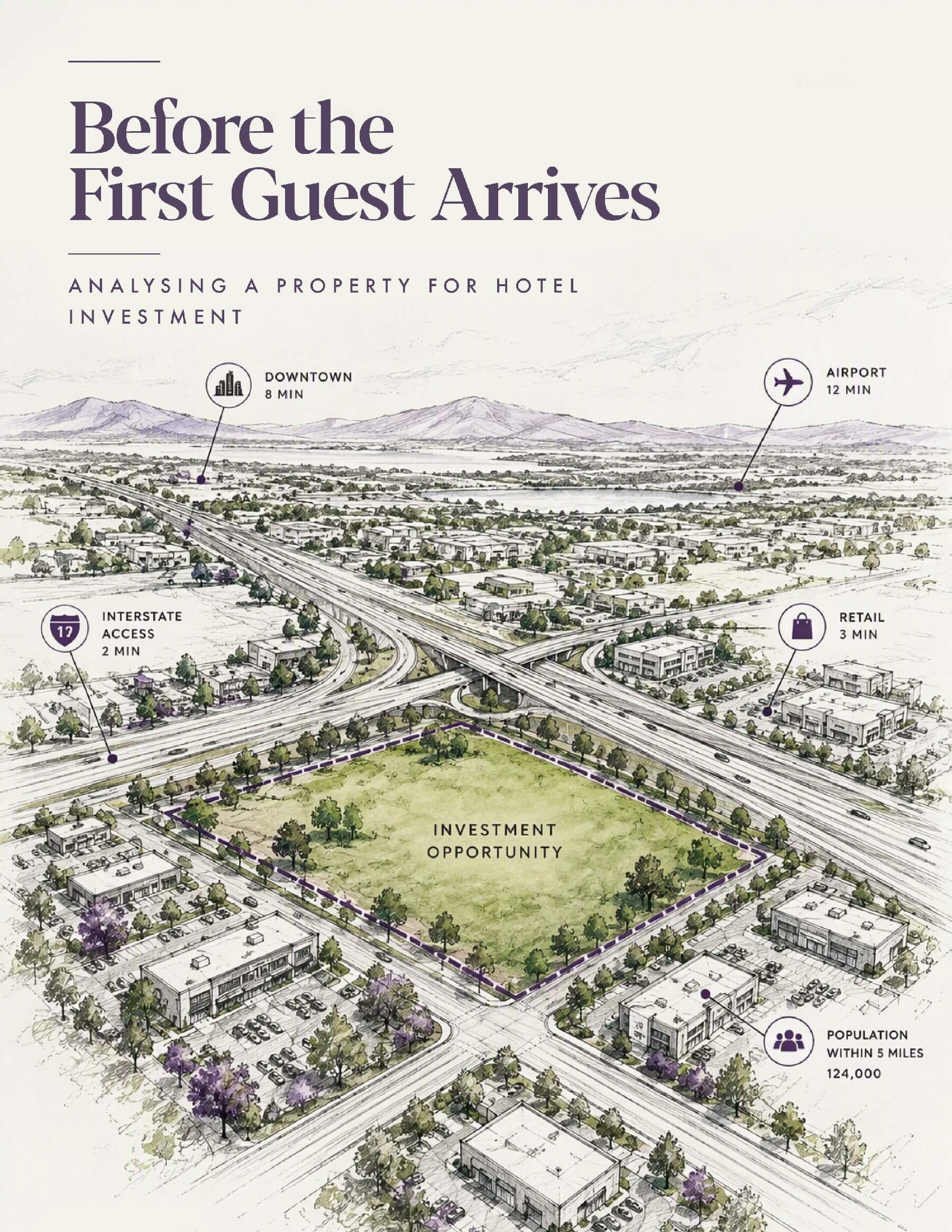
How an architectural feasibility study, site evaluation, and early planning process can save developers time, capital, and costly surprises.
In hotel development, excitement often begins with finding what appears to be the perfect site. The location looks promising, the market feels right, and the opportunity seems obvious. Yet many hospitality projects encounter unexpected challenges long before construction begins. A hotel brand may determine the site is not a fit. Zoning restrictions may limit the building size. Parking requirements may reduce guestroom counts. Market demand may not support the proposed concept. These are exactly the issues that effective pre-development services are designed to uncover early.
At Mayse Architects, we’ve seen firsthand how a thorough hotel feasibility study, combined with comprehensive hospitality development planning, can help owners make informed decisions before significant capital is invested.
Often, a developer may identify an attractive property and move forward without consulting a hotel analyst, architect, or hotel brand. While the opportunity may initially appear strong, challenges often emerge later in the process. These can include site constraints, zoning limitations, brand incompatibility, insufficient market demand, or development requirements that dramatically impact project viability.
This is why development due diligence is one of the most important phases of any hospitality project.
Before moving forward, owners should understand:
Answering these questions early can significantly reduce risk and improve investment outcomes.
A hotel feasibility study is a comprehensive development feasibility analysis performed before design begins. It evaluates whether a proposed hotel project is financially viable by examining factors such as market demand, competitive positioning, projected financial performance, and investment returns.
A quality architectural feasibility study helps stakeholders understand:
A well-researched feasibility study provides owners with decision-making confidence by identifying opportunities, constraints, and potential challenges before substantial resources are committed. They also provide valuable information to lenders and investors evaluating the project.
A successful hotel begins with the right site.
A comprehensive site feasibility analysis goes beyond location alone. Developers must evaluate:
This type of commercial site evaluation helps determine whether a property can actually support the desired hotel program while meeting operational requirements and brand standards.
Without proper evaluation, developers may discover late in the process that a site cannot accommodate the guestroom count, amenities, or parking needed to achieve financial objectives.
The next step in reducing risk is hospitality site planning.
Through schematic planning and architectural analysis, developers can visually test a project’s feasibility before advancing into detailed design. Early planning determines whether brand requirements, operational needs, building footprint, and parking demands can be accommodated on the property.
This process often includes:
By identifying site opportunities and constraints early, owners gain a much clearer understanding of project costs, schedules, and potential obstacles.
The architectural schematic drawing package is often the first visual representation of a hotel’s future potential. A professional schematic design transforms project goals into preliminary drawings that evaluate whether the desired hotel program and brand requirements can successfully fit on a property before full design begins.
Key benefits include:
In many cases, schematic planning becomes one of the most valuable forms of development risk reduction available to hotel owners.
One of the most overlooked aspects of hospitality development planning is understanding local regulations before design begins.
Early zoning analysis and code review architect services help identify restrictions related to:
Addressing these factors during pre-development can prevent expensive redesigns and schedule delays later in the process.
The most successful hospitality developments are rarely the result of luck. They are typically the result of disciplined planning, informed analysis, and strategic decision-making before design and construction begin.
A strong combination of hotel feasibility study, site feasibility analysis, development due diligence, and architectural planning helps owners determine whether a project is practical, profitable, and positioned for long-term success.Early evaluation helps identify opportunities and challenges when solutions are most effective and least costly.
At Mayse Architects, our team works with developers, owners, hotel brands, and investors to transform a vision into a practical development strategy. Through thoughtful planning, site evaluation, and hospitality-focused design expertise, we help clients move forward with greater confidence and a clearer path toward a successful hotel project.


